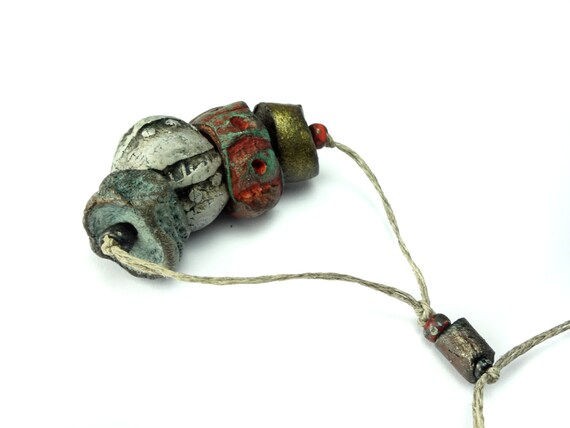
Have you ever wondered what Ceramic Clay is and why all "clay" is not actually ceramic?
In order to answer this question in the most intellectual manner, I am referencing many books on ceramics and pottery as well as draw from product information to help clear up some questions people may have about "Clay", in particular: Ceramic Clay.
Definition of what makes materials go from "clay" to "ceramic":
When you are in a discussion about "Ceramics", you may refer to some materials that are
dug from the earth as "clay". This is in reference to the many different clay deposits found all over the earth (some clay deposits are mined commercially and sold to the industry, sometimes clay is simply found and dug out by hand). These deposits of
clay can be combined with a number of dry materials and water, to make up various "clay bodies" that are formed, dried, then fired to different high temperatures.
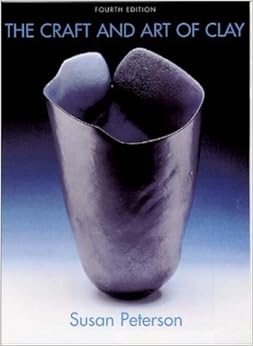
"The term ceramics refers to all non-metallic, inorganic materials that lend themselves to permanent hardening by high temperatures." (Peterson, Susan. The Craft and Art of Clay 3rd Edition, p11).
There are many ways to "fire" your ceramic clay to high temperatures. These techniques can be historically hands on traditional firing methods such as, but not limited to:
pit firing,
wood firing,
saggar firing,
salt firing,
Raku firing, etc, to the more commonly commercially used today:
electric or
gas kiln firing.
When talking about a piece of ceramic work, that piece will often be referred to by the identifiable kind of clay forming technique and the kind of firing they go through. Knowing this kind of information and using it properly in conversation will often bring a smile to the ceramic artists face, knowing that you "get" the process, appreciate and understand the skill, time, and effort that goes into making that unique handmade piece. And hopefully you will add one of their items to your collection.
While the clay item is completely dry but has yet to be fired at all, it is called greenware or un-fired clay. Once fired, it can officially be called Ceramic.
The
high firing temperatures of ceramic clay are achieved over scheduled amount of time. The process of heating up then cooling down a ceramic kiln can take hours into days depending on the type of firing it is. These high temperatures reached at the proper application of heat over a specific amount of time, will change the molecular structure of the clay, making that clay hard and more durable, changing the clay into ceramic.
"Ceramics are categorized into three categories by direct correlation to their fired density:
The fired density of a particular clay is important in the world of ceramic bead and jewelry making because it will help you be aware of the best use for that particular kind of bead.
Using proper terminology about your ceramic clay body in no way is derogatory about the quality of a bead, but it is helpful both as a bead maker and a jewelry designer so that your work can withstand wear and use.
Earthenware is the lowest fired of the three, and can chip easily if you are not careful with your metal tools and wire. Stoneware and Porcelain are both fired higher and are a bit more durable with wire, and are less likely to chip. From my own personal experience, work smart with your metal tools around any finished surface (no matter what the medium) and do not work them in a manner that will have them putting pressure up against the bead surface.
Some SAFETY in Ceramics:
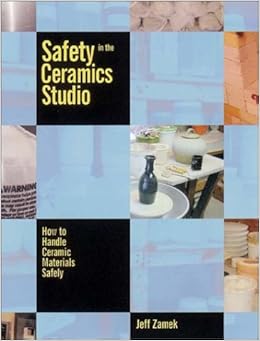
One thing that is taught through any ceramics class or book is to be aware of the dangers of working around ceramic materials, especially in a dry state - DUST!
Silica is a major component of a clay body as well as in glazes. You must keep dust to a minimum and wear proper safety attire to protect your body, especially your lungs where silica really sticks.
Colorants are often metals in powder form. In dry or powder form, these materials can form dust easily. And in a liquid state, they can still enter your body through your skin or cuts you may have.
You must read the Material Safety Data Sheet (MSDS) and warning labels on any of the materials you use and make sure you work safe and smart!
In a pottery or ceramics studio, you must be careful of tools that can be sharp, broken pieces that may be sharp, kilns that get hot, things that spin - such as a potters wheel, as you can be injured easily by not paying attention, and many other things.
Confusing Terminology:
It is important to educate yourself and understand and use the correct terminology when talking about materials and techniques.
Here are some terms that are often used in the Ceramics community that have different meanings when you cross over into other materials:
CLAY:
In ceramics - clay is a broad term that refers to the materials used to make up a ceramics clay body (must be fired to a high temperature, or it will break down over time).
In other crafts - clay is referred to a pliable material formed easily with hands. All kinds of materials can be considered "clay":
polymer clay,
metal clay,
epoxy clay,
glass clay,
paper clay,
cork clay,
air dry clay,
oven baked clay,
modeling clay,
Play-Doh,
homemade salt dough, etc.
All clay materials have some sort of water or wet medium that keeps the material pliable. It is more than likely that you must keep your clay wrapped up tight, away from exposure to air in order to keep it from drying out.
Also, many different Non-Ceramic clay being sold in the market may be described to have the "feel" or "color composition" of ceramic clay. Marketing department and individuals have created confusion by using titles such as air drying ceramic clay, terra cotta, stoneware, porcelain.
Please DO NOT confuse air drying clay or plastic clays with true Ceramic Clay. Especially do not fire an air drying clay or polymer based clay in your ceramic clay kiln because you may do harm to your kiln and the vapors that it produces can be toxic. Consult the product manufacturer of the "clay" item if you are unsure, and always look to see if there is a recommended firing temperature (ceramic clay temperatures are given in "
Cones").
GLAZE
In ceramics - a glaze is a layer of materials applied to ceramic clay that is fired to a high temperature.
In other crafts - a glaze is often a material painted on an item, then finished by air drying or heat set at a lower temperature.
PLASTIC:
In ceramics -
1. Plasticity is the state in which your ceramic clay is easily formed. It has to do with the alignment of clay particles, water and the ease in which it bends without cracking.
2. Physical plastic items and tools used in ceramics will stick to the clay, so a release agent (such as corn starch) should be used to aide in the release of the clay from the plastic surface. Often plastic is avoided in the ceramic studio as there are other materials easier to use readily available.
In other crafts - plastic is often some sort of a material product or tool.
RAKU:
In ceramics - Raku is specific firing technique where (short version) the ceramic piece is glazed, brought to maturing temperature of the glaze (often close to 1800 degrees F), and the work is removed while glowing hot and put into a reduction chamber where the organic combustable materials, amount of oxygen (or lack thereof which is "reduction"), and glaze materials all interact chemically creating beautiful unique effects.
In other crafts - Raku term is borrowed from ceramics to often represent a metallic rainbow finish of an item.
Similar to this type of confusion with Raku is a particular type of clay or firing: Terra Cotta, Stoneware, Porcelain are now commonly used to describe a "look" or a "feel", not an actual material or firing process or temperature.
HEAT or TEMPERATURE APPLICATION to CLAY:
In Ceramics - heat can be used to dry out your clay (sun, air, heater, dehydrator, etc).
In a standard kiln, your item is fired anywhere from 1100 degrees Fahrenheit to 2400 degrees Fahrenheit.
You must be mindful of heat and temperature with ceramic clay because drying your unfired clay item too fast may cause uneven drying and cracks. Kiln firing a clay too fast may cause it to explode if moisture is present or it may cause improper crystallization of the ceramic materials, making for a lesser quality item.
And when glaze firing pieces, anything the glaze comes in contact with during the firing, it will fuse to.
 |
Ceramic beads glazed and ready for their 8 hour slow glaze firing (2230 degrees F).
24 hours for a complete heating and cooling cycle to Cone 5/6. |
In other crafts - heat by sunlight, oven baking, heat gun, torch firing, kiln firing, can also be used to dry your material, and set the material. There are great variations in materials, and each responds differently to heat and temperature.
In science and technology,
the field of ceramics goes well beyond what we need to discuss here, but it is astonishing and always advancing.
In Closure
This brief overview of Ceramic clay and the use of these terms is here to help you as an artist and as a consumer understand that there are historically appropriate use of terminology about materials and techniques that should be understood and used correctly.
The art of ceramics is vast and if you are interested you should take the time to pick up some books, read a magazine, visit a museum or local craft show or gallery. There is nothing quite like having a handmade ceramic mug to use in the morning, or a little bead that reminds you of something special that you are able to keep with you throughout the day. All of these items carry stories that connect you with the artist and with the elements of the earth over time from which it came.
Quality, Craftsmanship and Honesty
No matter what medium you decide to work in, when you are making art, tools to sell, reselling materials, or making and selling components to designers or other artists, writing books, magazine articles, or self published tutorials about a specific material, it is up to you as an artist and educator to fully understand your material and to avoid using terminology in ways that are misleading or confusing.
In this day and age that we live in with technology at our fingertips, it is up to us as a creative community of human beings to take the time to think about our work, to do research about our materials, to be honest, and make corrections and updates whenever we realize a mistake has been made, as nobody is perfect.
When you are selling your finished work, you may choose to not say exactly what your material is because it may give away something unique about how you make your work, and that is your choice.
But you should never mis-represent your work by calling it something that it is not. Not even for marketing, as efforts like that, no matter how innocently done, can be seen as dishonest, and may ruin your credibility.
Over the next few weeks, a few ceramic bead artists that have been in the bead industry for a number of years will also be sharing through their blogs their insight and education about Ceramic Bead Making and how far we have come as a group of artists representing our unique work.
Links to those blog posts, as well as to other reliable sources of information about Ceramic components (artist beads, tutorials, explanations, examples, etc) can be found on our Team Pinterest board:
Ceramic Clay.
I hope you will come and explore with us this wonderful medium.
The author of this post Marsha Minutella (artist of
Marsha Neal Studio, LLC) has an Master of Arts in Ceramics from the University of Delaware, 2001.